 Manoj Kumar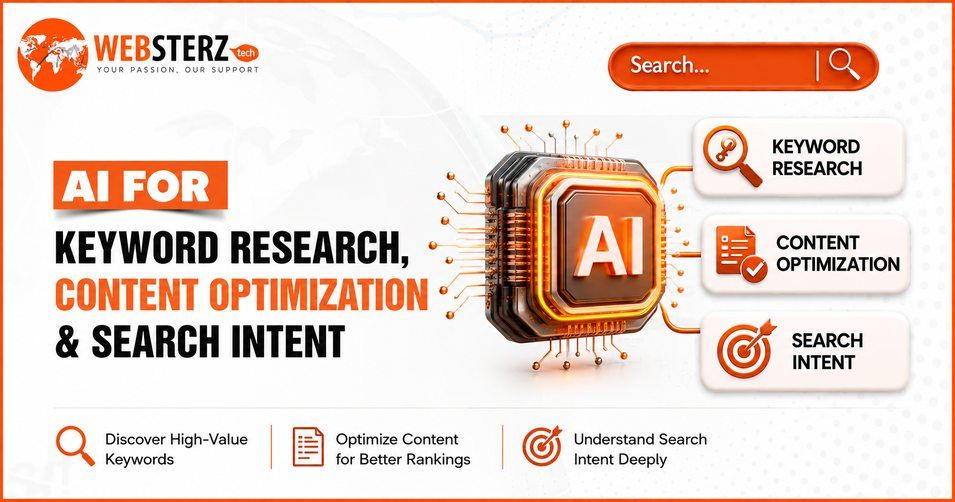
A year ago, AI keyword research meant pasting a topic into ChatGPT and getting 50 keywords back. Most of those keywords either had no search volume or were so competitive that ranking for them would take five years. Today the tools are smarter, the workflows are better, and the gap between teams using AI well and teams using it badly is wider than ever.
This guide covers what AI actually does well in keyword research, content optimization, and search intent analysis right now. It also covers what it still does badly, so you do not waste hours on output that ranks for nothing.
Talk to our team about AI-powered SEO
How AI Changed Keyword Research?
The old keyword research workflow looked like this: open Ahrefs or SEMrush, type a seed term, export 2,000 keywords, filter by volume and difficulty, group them manually, build a content map. A skilled SEO needed a full day per client.
AI compressed that to about 90 minutes. Tools like Surfer, Frase, and the newer AI features inside SEMrush and Ahrefs now cluster keywords by topic automatically, identify which keywords share the same SERP, and flag which clusters need a single page versus separate pages. The work that used to be eyeballing spreadsheets is now a one-click cluster map.
But here is what AI still gets wrong. It overstates search volume for branded and long-tail terms. It misidentifies search intent when the SERP is mixed — half informational, half commercial. And it suggests keywords that are technically related but make no business sense for your industry.
For the foundation of how AI fits into your wider strategy, our pillar guide on AI digital marketing covers the broader picture. This post zooms into one piece of it.
Where AI Actually Wins in Keyword Research?
Topical clustering at scale. Give an AI tool 5,000 raw keywords and ask it to group them by shared SERP. It does that in minutes. Doing it manually takes days. This is the single biggest time saver in modern SEO.
Keyword gap analysis. Feed in your URL and 3 competitor URLs. AI tools pull the keywords competitors rank for that you do not, then sort them by opportunity score. The output is not perfect, but it is a strong starting list to refine.
Content brief generation. Tools like Frase and Clearscope pull the top 10 SERP results, extract the H2s and entities used across all of them, and produce a brief that tells you what to cover. This used to take an SEO three hours per brief.
Translating insight into copy. Once a keyword is chosen, AI helps draft headings, meta descriptions, and the first version of FAQs that match what Google is actually rewarding.
For example, when we did keyword research for a US-based therapy practice last quarter, AI clustering split 1,200 keywords into 14 clean topic groups in under 5 minutes. Manual clustering of the same list would have taken a full afternoon.
Where AI Still Loses to a Human?

AI does not understand business context. It will happily suggest “best free SEO tools” as a target keyword for an SEO agency, missing that ranking for that keyword pulls in DIY users who never become clients.
AI confuses search intent on hybrid SERPs. A keyword like “best CRM” returns a SERP with listicles, software comparison sites, and a few brand pages. AI often picks the wrong content type. A human SEO looks at the same SERP and notices that 8 out of 10 results are listicles, so a listicle is the only realistic format to rank for that term.
AI invents keyword volume. Smaller niches, regional searches, and emerging topics often show inflated numbers in AI tools because the underlying data sources are thin.
This is why every AI keyword output still needs a human review pass. Skip that step and you build a content strategy around keywords that look great in the export and produce nothing in the rankings. If you want to see how this connects with broader keyword fundamentals, our piece on the 5 keyword research mistakes most people make covers the manual pitfalls that AI does not fix.
Get a free AI-assisted keyword audit for your site
AI Content Optimization: What Has Changed Since 2024
Surfer SEO used to be the only serious player here. Now there are at least eight tools doing real-time content scoring against the top-ranking pages for a target keyword. The mechanics are similar across all of them: the tool analyzes the top 10 results, identifies semantic terms and entities those pages cover, and scores your draft against that benchmark.
What changed in 2025-2026 is that Google’s algorithm started weighting topical depth and entity coverage more heavily than raw keyword density. AI content optimization tools picked up on that shift fast. A page that scores 75 out of 100 on a content optimizer today ranks meaningfully better than a page that scores 45 — assuming the writing is genuinely useful and not just keyword-stuffed.
The catch: a high optimization score does not mean a high-ranking page. Plenty of content scores 90 out of 100 and never breaks page 3. The score tells you the page is technically competitive. It does not tell you the page has anything new to say, which is what Google’s helpful content system actually rewards.
The best workflow we have found:
- AI generates the brief and outline
- A human writer drafts the content with original examples and opinions
- AI checks the draft against the optimization benchmark
- The writer makes targeted edits where the score is weakest
This combination beats pure AI-written content every time. It also beats pure human writing that ignores the optimization signals.
Search Intent Analysis: The Underrated Use of AI
The biggest unlock from AI in 2026 is not keyword research or content optimization. It is search intent classification.
Old workflow: a human checked the SERP for each keyword to decide if it was informational, commercial, transactional, or navigational. Slow.
New workflow: an AI model processes 1,000 keywords against their live SERPs and tags every one in 15 minutes. The output tells you which keywords need a blog post, which need a service page, which need a comparison page, and which to ignore because the SERP is dominated by reviews or aggregator sites you cannot displace.
This matters because most content that fails to rank fails on intent mismatch. The keyword is right, the content is well-written, but the page format is wrong for what Google is rewarding on that SERP. AI catches this faster than any other tool we have used.
Putting It All Together
The honest version of AI keyword research in 2026 looks like this. You use AI for the heavy lifting — clustering, gap analysis, intent classification, and content briefs. You use humans for the judgment — context, business fit, SERP interpretation, and the actual writing. Skip either side and you lose.
The agencies winning right now treat AI as a research analyst, not a strategist. The strategist is still you.
If you want to see how this connects to AI-powered ranking signals beyond keywords, our deep dive on how AI improves search rankings covers the algorithm side. And our pillar guide on AI digital marketing ties it all back to the full marketing stack.